

PopRock Blog

Nurturing a Balanced Approach to Performing Arts Education!
By Paul Kwo
“That's Great!” Says Tony the Tiger. I remember this commercial from my childhood promoting a cereal brand that is supposed to be well-balanced. It gives the child the right amount of fun as well as the right amount of nutrition that's needed. The same really goes for a teacher in the performing arts.
Certainly many children and teens begin their studies in the performing arts with positive attitudes, enjoying the fun that these performing arts bring to them. But over the course of a year or two, the majority of the students begin to grow tire of the constant practice and the nagging of their parents to practice. Many parents push their kid so as to not waste their hard-earned money paying for the weekly lessons. But quite often to the detriment of the student's enjoyment, these aggressive pushes often turn the students away from the art that they once enjoyed or even loved.
But the opposite is not any better. Some parents believing that the arts should be fun and that the child should simply enjoy their time spent studying the art decidedly not to ever push their child to strive for some form of excellence. Some of these child end up, with the help of incompetent teachers, studying for years with little to no advancement in their skill level. Thus wasting valuable time the child has and the money the parents spent.
So how do we find this balance between pushing a child versus maintaining the enjoyment?
1. Foster an environment friendly to practice. (Do NOT replace fun time with practice time.)
So often do I have students telling me how they simply don't have time to practice. I have heard so many excuses in my life ranging from homework to family obligations to bizarre tasks or chores they had to do, the underlying issue remain: A child does not know how to properly manage their time.
A parent's job is NOT to yell at a child to practice and to demand the child perfection in their practice. It is the teacher's job to demand the perfection and to help a child understand the importance of practice. A parent's job is to help a child manage their time so that they can actually be freed to practice. But so often I see parents instead of managing their child's schedule, they simply replace a child's existing free fun time with practice. If a boss replaced their employee's break time with more work, the employee would certainly build up resentment about the work they are to do over a long period of time. Why would we think a child would behave any differently? Do not replace a child's fun time with practice. Rather schedule out your child's time outside of school to equally balance fun time and work time including homework and practice.
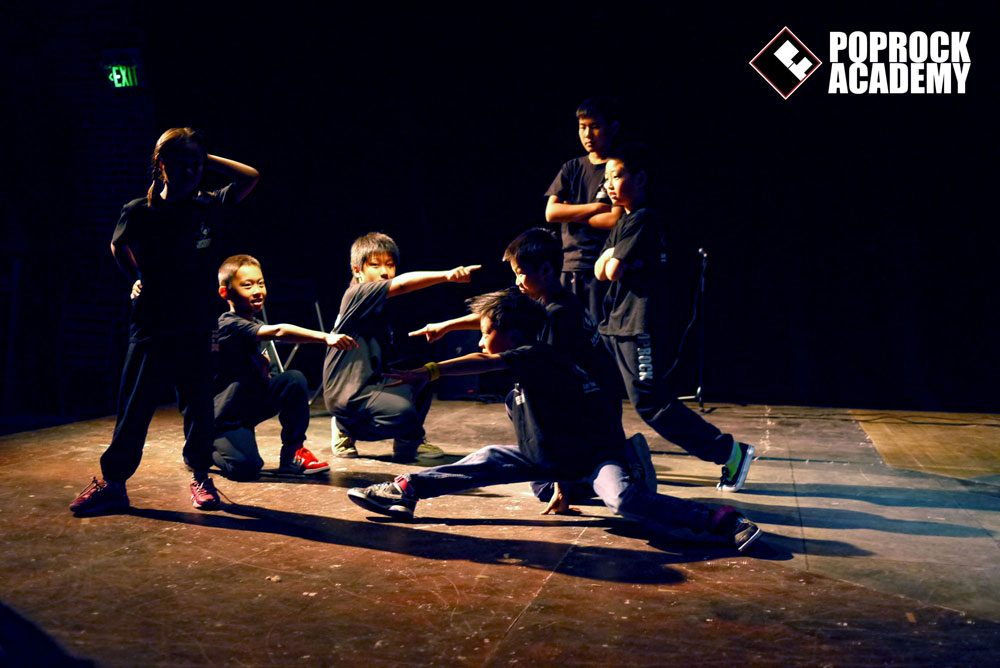
The Power of Performing Arts!
Sometimes I get overwhelmed by the amount of research out there on every imaginable topic. With just as much research to prove one side right, there seem to be just as much evidence to prove the opposite is true. So my faith in the performing arts really comes back to my fundamental need to express, and my own experience of how it has shaped me to become who I am today.
ACTING
Linda Morgan, editor with ParentMap and author of the book Beyond Smart says “acting and drama can helps kids develop emotionally and academically.” It makes simple logical sense. In acting, students work on memorization of lines, timing and following cues. It also improv their public speaking skills. The material present can lead students to learn about history and authors while having fun at the same time. Furthermore, acting helps students develop better understanding of human emotions, and their abilities to connect, interact and collaborate with other individuals. It helps build confidence in the students in a fun and positive atmosphere.
DANCE
In today's obese culture of fattening foods and overweight children and adults, any opportunity we have to foster a healthier, exercise based lifestyle in our next generation is a plus. Dance is one of the ways students can enjoy exercise in a fun and team building environment. It also carries similar benefits acting classes has when it comes to helping student build emotional understanding and of student's confidence. But beyond the obvious physical benefits of dance, Massachusetts Institute of Technology student's after-school program uses dance to improve math skills. This is just one of the many programs out there that believe dance and music has a direct benefit for student's development in mathematics.
MUSIC
Music is probably one of the most studied discipline when it comes to its correlations to academic benefits. The Mozart effect was one of the best known that links listening to classical music can benefit infants brain development. A 2005 University of North Carolina at Greensboro also report that several academic studies have found overall increases in test scores across academic disciplines for those who are in music programs or play a musical instrument.
All performing arts carry the same fundamental idea of building confidence, and we want to help students achieve their full potential here at PopRock Academy in Alhambra.
PopRock Academy is conveniently centrally located in the West San Gabriel Valley. We are 5 to 10 minutes away from Pasadena and San Marino to our north, San Gabriel, Temple City and Arcadia to our east and Monterey Park and Rosemead to our south. Stop by our studio to find out more about what we have to offer.
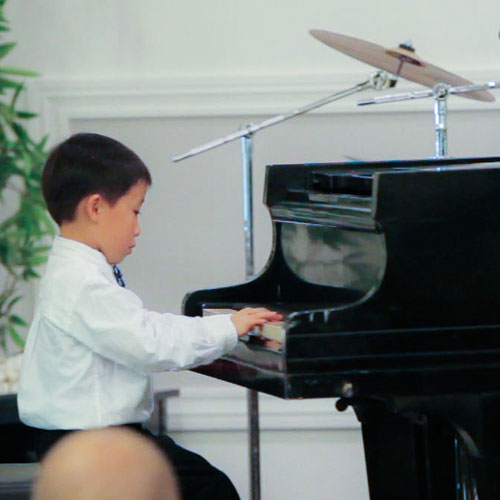
Mastering the Piano: How Long Does it Take?
By Paul Kwo
There is a saying that it takes 10,000 hours to be the master of anything.
Granted most people coming to piano lessons are not trying to become grandmasters of the instrument. They just want to be able to play the piano and play it well enough to entertain themselves. So how many hours does it really take to learn the piano?
Piano is probably one of the most difficult, if not the most difficult instrument to learn. Granted that every instrument has its own challenges, but the piano presents one of the toughest simply for the fact that aside from vocal music, there's more music written for piano than anything else. There are so much variety of music that one can learn, it's simply mind boggling.
I'll break it down for you.
A typical student (between age 8 to 12 taking an average of 30 to 45 minutes of lesson the first year) in a year can learn to play a simple song consist primarily of one note at a time between the two hands, with an occasional chord. Basically by the end of the year, a student should be able to play a relatively simple version of Happy Birthday to you where both hands may occasionally play one one in each hand simultaneously.
Then during the second year, most student should move to 45 minutes to 1 hour private lesson. By the end of the year, they should be able to play something a little more challenging where the two hands may have different things going on at the same time. An easy folk song or a simplified rendition of a pop song with easy accompaniment should be accomplishable.
Then on the third year, a student whose been taking 1 hour lesson should be able to play simple Bach pieces and do some basic fake book music with chords going on in one hand and melody in the other.
By the forth year, a student then should be able to play an easy Beethoven Sonatina or other pieces in that level of difficulty, and read medium difficulty pop music.
So at the very least, a student really needs 4 years to be able to play basic Classical pieces and do a descent job faking a pop song or reading a simpler version of one. But of course some students practice more and some are just more naturally gifted in playing the piano. But for most people after 4 years of piano, you should have enough basic skills to keep you entertained as long as you keep on doing it. But if you stop playing, chances are you will slowly forget most of what you have learned unless if you have taken over 10 years of piano. Then you can afford a few years of non-practice.
Paul Kwo teaches piano as well as voice and runs PopRock Academy in Alhambra, CA, near San Marino and South Pasadena in the San Gabriel Valley.
The Truth About Musical Versatility!
By Paul Kwo
No one can guarantee stardom.
But a career in entertainment is not the same as a desire to become a star. There are an enormous amount of people working in the entertainment business, and more specifically as performers who are not famous stars. They work on a regular basis as working actors, dancers and musicians at a wide variety of gigs, making a good sustainable living.
The road to becoming a performer or even working in the entertainment business is full of challenges. It is fun and exciting, but filled with obstacles to overcome. But with hard work and consistency, it is an achievable goal.
Being in Alhambra in the San Gabriel Valley, competing with the best of the best in the world in Los Angeles, the quality of talent is the highest in the world. It doesn't get any harder than this in Los Angeles. So to be competitive, it is vital to keep up our training and keep up our chops in whatever area it is that we are interested in working in. Every new skill puts us at an advantage over other people who are competing for the same jobs.
Whether it is in music, acting or dance, a good network of people is important. As a former coach of mine, Joe Hacker, always said, “Nobody does it alone in this industry.” It is vital that we acknowledge that we need to build up a good support team for ourselves. It isn't just knowing people who can get you work, but also know people who will give you the emotional support that you need to keep you going. We all need people to keep encouraging us as this industry is ruthless and will tear people down without the proper perspective.
With solid continual training and a good network of people in our mix, it is just a numbers game. Keep putting the numbers out there and eventually someone will bit. Something will happen. A career as a performer is a business, not a job. Every performer needs to understand what their brand is, what their business and sell that product with consistency. Keep tugging at it little by little until people start to take the bait. Eventually something will happen, and things will pile on and it will gain momentum.
Finally the career is a rollercoaster ride. It will have its ups and downs. It is not a continual climb upwards. There is no corporate ladder to climb. It is just a journey that requires patience and flexibility. It requires an adaptive spirit so that you can navigate the turmoils from the enormous amounts of rejections. And even the biggest stars can and will fall. It is all a matter of preparing ourselves for the times when we do fall so that we can get back up and pick ourselves up again and again. It is through this perseverance that performers shine through the rubble and become stars in their own right, and recognized among our peers.
PopRock Academy serves the San Gabriel Valley. We are located in the city of Alhambra, conveniently located near San Marino, South Pasadena, San Gabriel, Temple City, Arcadia, Monterey Park, Rosemead, El Monte, Highland Park, Eagle Rock, Montebello, Monorovia, Altadena and downtown Los Angeles.

Embracing Musical Versatility!
By Paul Kwo
A few months ago during a worship service, the associate pastor of the church in Culver City where I am the choir and Praise Band director turned to our guest accompanist and asked her to play the song happy birthday in celebration of the church's birthday. The accompanist who has a Bachelor degree in piano performance from a well-known American university jumped up off the piano bench, turned to me and said, “I don't know how to play Happy Birthday.”
It may be trivial but the truth is, just because you know how to play Classical music doesn't mean you know how to play any music. I have encountered many parents who have the notion that if their child learns Classical music, they would then be able to perform any type of music. This is absolutely false. Many Classically trained music teachers shun Pop music, refusing to teach their students the proper skills to perform. The truth of the reality is that many of these music teachers actually cannot perform Pop or Jazz or any other non Classical music and so they refuse to teach them, and deflecting from their own inadequacies by calling them lesser art form.
CLASSICAL, JAZZ & CONTEMPORARY
Every genre deserves its respect. It cannot be assumed that one is easier or superior to another. They are simply different. Surely within each genre we have great works and lesser works. But to cross genre and make sweeping generalization that one is automatically better than the other is simply a stereotype. Every genre requires hard work to learn and to master.
I had many students make mistakes or cannot perform a specific passage a certain way turn and say to me, 'that's what I chose to do.' Surely music is subjective and ultimately it is what the artist wants to present that matters. But a choice implies that the individual had the ability to do it either way and chose to do it one way over the other. In order for a Classical musician say they chose Classical music over the others, they must be able to actually perform the other genres. Chances are they can't. They may still claim they prefer listening to Classical music, but they certainly didn't choose to perform Classical music. They only know how to perform Classical music. They chose to study only Classical music. But they didn't chose to not perform Jazz or Contemporary. They simply don't know how to; they chose not to have train in it.
There is nothing wrong with not training in other genres. Many great musicians are only trained in one genre and became a specialist. But even more great musicians were trained in multiple disciplines. In a world that's increasingly global, where the competition is increasingly fierce, specialists are loosing out on many potential gigs because they simply cannot compete with others who are more versatile and well-rounded. Certainly not everyone wants to become a professional musician. Many simply want to enjoy the process of learning music. But I can easily name a handful of scenarios in a person's life where he or she may need more than just classical music skills. And it's simply a shame for anyone to spend ten plus years of their life to learn something, only to find themselves in a situation where they can't even do the most basic of thing like perform Happy Birthday.
So whether your goal is to play for yourself in the comfort of your home in Alhambra, or play some local church gigs in the San Gabriel Valley, or to become a world class musicians, the question really remains: Do you want to be the professionally trained musician who cannot play Happy Birthday on demand?