
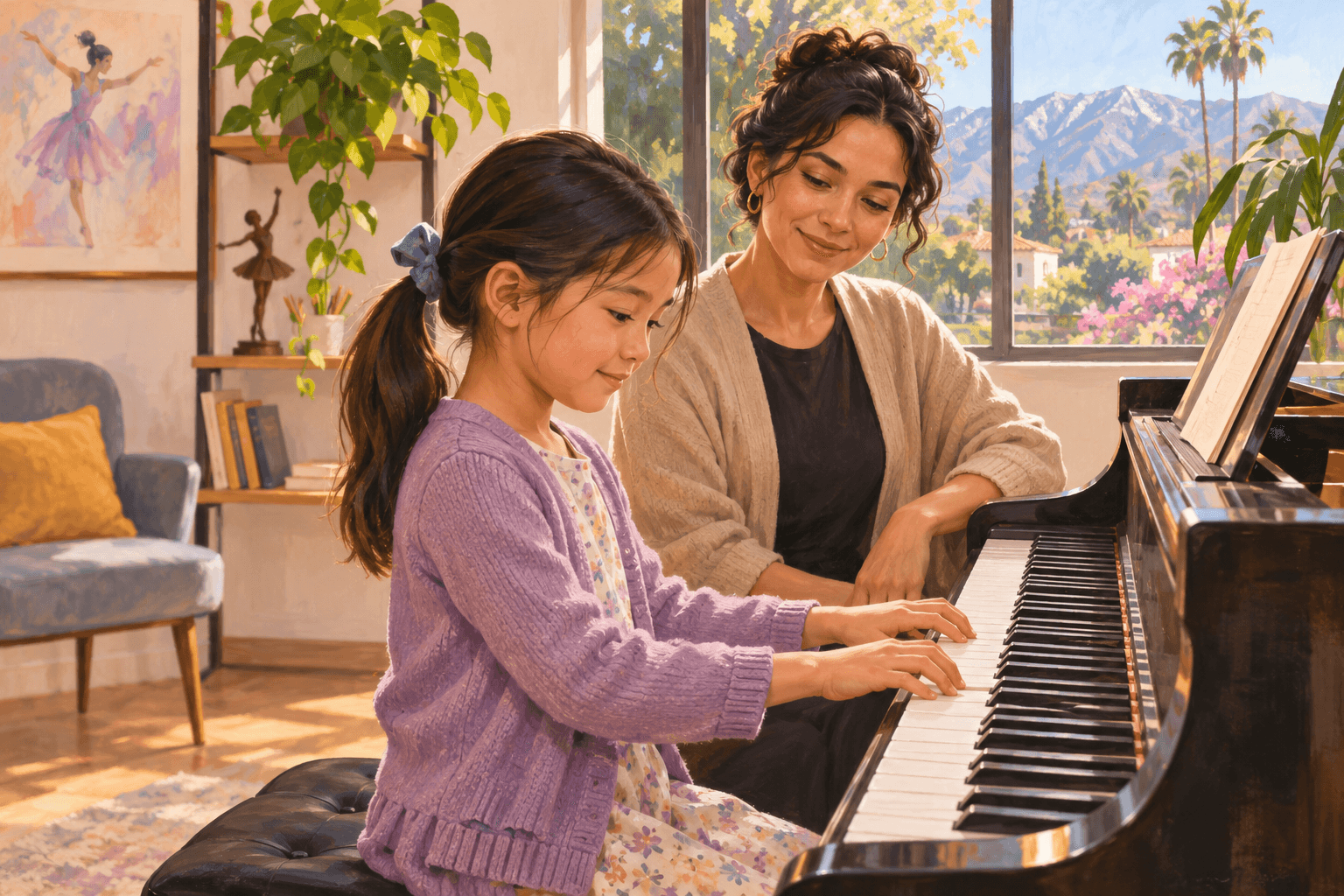
When a child comes to a first piano lesson, the parent and child may have different pictures of what is about to happen. A parent may be thinking about classical training. The child may simply want to know whether they can make a sound they recognize.
I have seen the smile that comes when a teacher helps a beginner play a simple, familiar tune. That small moment matters. Piano is difficult, and a recognizable success gives the student something concrete to enjoy while we build the foundation underneath it.
Begin with something the student can connect to
A familiar melody gives a beginner a reason to listen and try again. It helps connect the work in front of them with music they already care about.
That does not mean every lesson follows the same song list. I want the teacher to notice what catches this particular student's interest, then use it alongside the skills they need to develop. A child's first musical interest can grow in many directions.
At PopRock Academy in Temple City, private piano lessons begin at age 4. Complete beginners are welcome. Students do not need to arrive knowing how to read music.
Small wins still need a foundation
The first month can include foundational technique, intervals, rhythmic notation, staff reading, sight-reading, hand coordination, ear training and music appreciation. Each part supports the student's ability to understand what they are playing.
A short tune can bring satisfaction while those skills are still developing. The aim is to give the student manageable challenges they can work through, rather than making the first month feel like an endless test of everything they cannot yet do.
Teachers choose repertoire around the child's interests while using established approaches such as the Frances Clark Library's Music Tree series, Alfred methods and other longstanding methodologies. Lessons include classical and contemporary music, music reading, chord charts, rhythm and technique.
Have an instrument ready at home
A piano or keyboard is needed within the first week of lessons.
For a young child whose family is still finding out whether piano will become a continuing interest, a basic keyboard is an acceptable beginning. Once that interest is established, continuing students need a full 88-key weighted keyboard or acoustic piano beyond the first few months for proper technical development.
Ask the instructor about the home setup before making a major purchase. The instrument should support the student's present work and the technique they are developing.
Ask what the teacher is helping your child do
I would encourage parents to look beyond the number of songs completed. A student may be learning to hold a rhythm more steadily, recognize a pattern or coordinate something that previously felt difficult.
Ask the teacher:
- What is the small goal we are working toward?
- What can my child now do more independently?
- What should home practice focus on?
- What is worth celebrating this week?
PopRock teachers track progress individually and regularly discuss improvements with parents. Those conversations help keep expectations connected to the actual child.
Let the first month be a beginning
I want a beginner to experience both the challenge and the pleasure of making music. A familiar tune and a smile are a beginning we can build on. Over time, the teacher can broaden the repertoire and deepen the student's understanding.
See our piano lesson program for current details, or contact PopRock Academy to discuss your child's starting point.